


How Much Does Blockchain Software Development Cost in 2026?

Blockchain can serve as a beneficial resource for businesses. Companies in finance find ways to secure transactions. Healthcare uses it to store records in a safe way. Gaming and retail find that it helps with fair platforms and trust. Logistics and governments use it to track information without errors.
A software development company can build blockchain solutions that are strong and can grow with the needs. Understanding expenses helps in planning long-term projects with secure blockchain platforms. In this blog, we will explore the blockchain software development cost in detail.
What Determines the Cost of Blockchain Software Development in 2026?
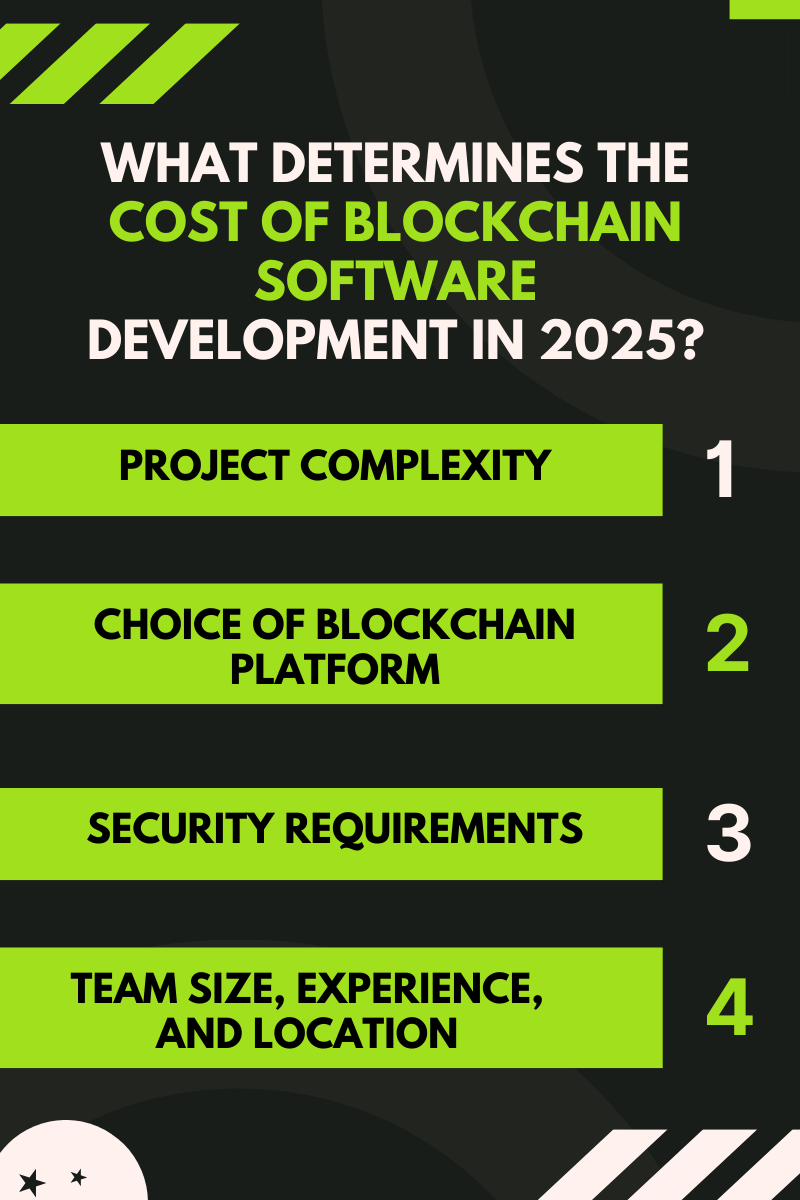
Project Complexity
A project with plain actions stays at a lower cost, and a project with many layers moves to a higher cost range because each layer needs long hours and strong skills.
A basic wallet works with a short building time, and a project with lending and staking, and many chain links move with a long shaping time. A team with high skill is rare, and the price grows when the workflow grows.
Choice of Blockchain Platform
A platform choice changes the full building path because each chain holds its own tools and its own coding way. A project on Ethereum needs one coding path, and a project on Solana needs another coding path, and this changes the price. A chain with rare skills needs higher spending because the talent pool stays short and the development needs long-term focus.
Security Requirements
A project that handles stored value needs very strong protection features because one small weak point can break the whole structure. A long testing phase takes place with audits and steady checks, and this adds a strong cost to the plan. A project linked with finance rules or health rules also needs many checks from global rules, and this adds another group of costs.
Team Size, Experience, and Location
A project shaped by a large, skilled team moves with a higher cost because many people with high knowledge stay in the plan. A team based in high-cost regions demands higher spending because living costs stay high for them. A project with senior engineers receives higher pay, while a junior team receives lower pay but often takes a longer time.
In-depth Blockchain Software Development Cost Breakdown (2026 Estimates)
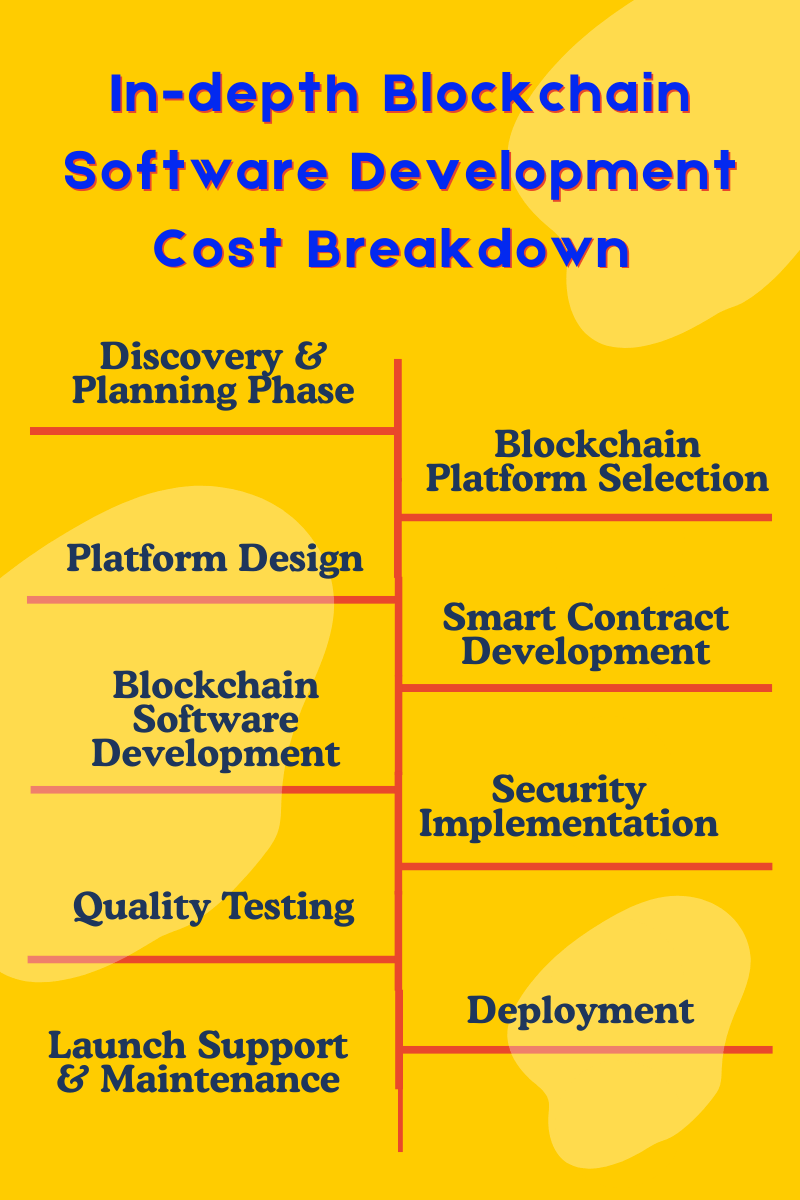
Discovery & Planning Phase
A long first stage starts with a slow study of the idea and a wide check of what the project may bring in a steady way. A team moves through the aims and the use case, and the study grows into a long set of notes that guide the later build work.
A gentle review of markets grows during this stage, and this brings a clear view of the project path. Costs move from 1,000 USD to 4,000 USD for the scope study and move from 1,000 USD to 3,000 USD for the whitepaper notes.
Blockchain Platform Selection
A choice of platform sets the base for the full project, and this choice shapes how the app moves and works in the long run. A project with simple needs takes a low-range cost, while a project with deeper network needs goes higher.
A wide plan of nodes and links may raise the full cost when private networks stand as the base. Costs move from 5,000 USD to 20,000 USD for smart contracts, move from 2,000 USD to 8,000 USD for wallets, and move from 3,000 USD to 15,000 USD for custom links.
Platform Design
A long design stage helps the app appear in front of users, and the process widens. A plain layout with few screens stands in the low range, while a large design with moving parts moves to higher ranges.
A long prototype may help teams shape the route of each section, though this also raises the cost. Costs move from 2,000 USD to 6,000 USD for design depth and move from 2,000 USD to 5,000 USD for prototype type.
Smart Contract Development
A set of coded rules appears at the core of the project, and these rules move through long checks and long tests. A contract with many paths takes a higher cost due to long code review stages. A full test grows around the coded rules because mistakes cannot be changed later. Outlay is from $4,000 to $15,000 for the contract. It can cost 7,000 USD for tests.
Blockchain Software Development
A long build stage grows the function side and the user side together, and each part takes time due to node links and code paths. A small dashboard stays in a lower range, while a large DeFi or NFT platform moves to higher levels. A project with a wide feature set also adds more work hours and more build tests. The backend code expenses are $25,000, and the frontend is around $10,000.
Security Implementation
A long protection stage grows across the project because any weak point may harm users and the full service. A wide use of coded locks and strong link guards grows into the app as the build moves ahead. A long round of checks stands around each part to keep risks low. Expenditures for coded locks range from about $3,000. The fee for other basic security tasks is approximately $4,000.
Quality Testing
A long test stage grows before launch, and this keeps the app on a steady path once live. A wide test cycle covers the contract parts, the backend parts, and the user side, which takes long hours.
A project with heavy functions needs more time in this phase, and this raises the cost. Charges range from 2,000 to 6,000 USD for contract tests, 2,000 to 5,000 USD for backend checks, and 2,000 to 5,000 USD for user-side security checks.
Deployment
A long development process brings the app to live use, and this includes contract launch, node setup, and wallet setup. A project with mobile or web versions goes through long rounds of store steps, which adds to the cost.
A steady release rises from careful checks done before the final push. Expenses move from 1,000 USD to 4,000 USD for the contract launch. It can move from 1,000 USD to 3,000 USD for publishing and move from 1,000 USD to 3,000 USD for platform tasks.
Launch Support & Maintenance
A monitoring stage starts after launch, and this keeps the app in steady use for years. A team moves through fixes and long checks, and adds updates when new needs arise. A large project takes more upkeep time, and this moves the yearly cost higher. Fixes cost between $3,000, and for updates, it is around $7,000 yearly.
Additional Costs to Consider in Blockchain Development
Smart Contract Development: A smart contract remains the main block for most chain projects because it guides actions without outside triggers. A simple contract stays light and costs less, while a heavy contract with many logic functionalities requires higher spending. A mistake in code can break stored value, so long reviewing and checking steps add extra cost to the development.
Consensus Mechanisms: A network with PoS, DPoS, or PoA, or a shaped custom method, needs long engineering hours because the base logic must stay stable. A plan that builds a fresh chain or changes a known chain needs many structural lines, and this increases the cost. A strong consensus design keeps the network steady, so it needs long testing hours.
Wallet Integration: A modern user expects access through known wallets, so the development team must shape the links in a safe way. A wallet with multi-chain support or strict key rules needs a long code time, and this raises the cost. A hardware wallet link or multi-signature path also needs special coding, which moves spending to a higher level.
Decentralized Application dApp Functionalities: A dApp with staking or liquidity tasks or NFT creation needs many layers in both front and back lines. A project with AI-driven tasks, or on-chain voting, or chain-crossing lines, needs a long shaping time, which increases the cost. A complex feature brings more code and more testing, so the full budget rises.
Node Setup and Infrastructure: A platform that runs its own nodes needs hosting and monitoring because the node must stay live at all times. A plan may use ready-made chain services, but still needs correct shaping, and this adds cost. A network with many nodes needs maintenance and strong checking, so the long-term cost moves upward.
How Long Does Blockchain Software Development Take?
Build From Scratch Duration
A project made from the base level usually takes six months to a year because every layer moves through long testing stages and long planning stages that need steady progress.
A full build grows step by step through design, coding, testing, and live checks that stretch across ten to fourteen months in most cases. A team moves through each part slowly, and the whole work needs more time when custom needs rise and change during the long path.
White Label Solution Duration
A ready base with fixed features stays helpful because the main frame already stands and the work moves in a shorter path. A white label setup usually reaches completion within two to four months because the tasks mostly stay around setup changes, design shifts, and steady testing of existing parts. A project of this type often moves forward without long delays because the heavy construction already existed before the start.
Clone Script Duration
A clone script moves on a faster route because the structure is already prepared with core functions already in place. A team only adds new features, new settings, etc, and this usually brings the project to an end within three to six weeks. This works well for firms that need a quick launch time.
Cost Comparison: In-House Development vs Outsourcing
| Type | In-House Development | Outsourcing |
|---|---|---|
| Setup Cost | The setup cost stays high | The setup cost stays low |
| Pay Model | Salaries stay fixed each month | Pay stays linked to the project only |
| Office Needs | Office tools add more cost | No extra office tools needed |
| Skill Training | Staff need long training | Skill stays ready from the start |
| Hiring Time | Hiring takes a long time | Work starts and stays fast |
| Upgrade Cost | Upgrades increase spending | Upgrades stay inside plans |
| Team Size | Hard to scale teams | Easy to scale teams |
How to Reduce Blockchain Development Costs Without Losing Quality
- Start With an MVP: An MVP remains a small first version that helps a project move in a steady way with less spending, as the early stage carries only the most needed functions.
A team builds this small version to understand how users act and how the idea moves in the market before going into a wide build. Many projects stay safer when they begin with this method because it avoids large spending on parts that may not support the final goal. - Use Existing Templates or Frameworks: Templates and known frameworks help a project move with less waste since they hold tested rules that work in many cases. A project uses known token rules like ERC-20 or ERC-721 and gains a ready base that supports safety and speed.
Libraries like OpenZeppelin give a working path that shortens coding time and lowers the chance of major failures during the build. - Blockchain-as-a-Service: BaaS tools give hosted platforms that allow a project to run blockchain functions without building its own. A company uses these hosted tools to run nodes and other parts while paying far less than a full in-house build.
This method lets teams focus on their own idea while the base layer stays managed by strong service providers. - Outsourcing: A project sometimes sends the work to skilled teams in regions with better pricing, which helps in lowering the overall spending plan. Many places hold strong talent that can deliver stable blockchain builds with steady quality.
A team must only check past work and sample projects to ensure that the service stays trustworthy and steady.
Real-World Blockchain Project Cost Examples
| Basic Crypto Wallet | A basic wallet holds simple functions that support sending and receiving with a clear history and simple security steps. The cost in 2026 often moves between twenty thousand and sixty thousand dollars based on design and strength levels. Adding networks or stronger security rules can push the cost to a higher range. |
| Mid-level NFT Marketplace | An NFT marketplace with medium-sized functions offers minting and trading with a steady flow, along with parts that manage creator returns. The cost stays mostly between eighty thousand and one hundred eighty thousand dollars based on the depth of the build. Extra features like AI minting or wider chain support can move the spending to a higher side. |
| High-end DeFi Platforms | A strong DeFi platform carries parts like staking pools and loans with many safety rules added for stable running. The spending often begins near two hundred thousand dollars and can move past one million based on the range of functions. Security checks and long audits take a large part of the final cost since they hold high importance in these platforms. |
Looking for a Blockchain Software Development Company? Here’s Why We’re the Right Choice
Strong Industry Experience
Our experts carry long years of service in blockchain work, and each project adds slow growth that helps future tasks in steady ways, and this long path gives clients steady trust in our USA service.
Our developers follow stable methods that come from long industry learning, and this helps each project gain solid shape through clear plans. Our long presence in the USA market allows constant learning that moves through many business areas with stable progress.
Highly Skilled Experts
The developers in our company learn many Web3 tools, and each person adds steady knowledge that helps large projects move with a steady pace across the USA market.
Our experts stay updated through careful study that grows over time, and this helps clients gain strong platforms built through patient work. Our team shares lessons through simple steps that guide each project toward a stable output that supports many USA businesses.
On-Time Project Delivery
Our company works with a steady schedule, and each project follows a planned path that keeps the whole process moving at the right time across the USA.
Our team builds simple tracking methods that allow clear movement from one stage to another without sudden delay. Our service model supports clients with steady timing that helps them plan their USA business needs with stable confidence.
Client-Focused Development
We shape each project around the client’s goal, and our team listens in steady ways and builds tasks that match long-term needs for many USA companies. Our experts study project details and set clear steps that connect with the client’s aims in a patient way. Our approach gives clients steady comfort as each stage moves in a simple flow that matches their USA market plans.
Reliable Support and Maintenance
We offer lasting care after delivery, and our workers stay ready to guide clients through future needs across the USA market. Our support team watches each product with steady attention and gives simple guidance when needs arise. Our long-service approach builds trust through patient help that stays active for USA clients through many stages of their business growth.
Conclusion
Blockchain software holds strong potential for business growth and long-term success. Investment in proper development can bring steady performance and trust in the Web3 sector. Businesses can benefit from reliable platforms that support secure transactions, and the market continues to show steady demand for blockchain solutions.
Fire Bee Techno Services is a reputed blockchain development company that provides expertise to guide blockchain projects from idea to execution with clear planning and professional support. Contact our experts today to start your blockchain software development and secure long-term business growth.