





How to Build a Multi-Chain Crypto Wallet Using TokenPocket Clone App Development
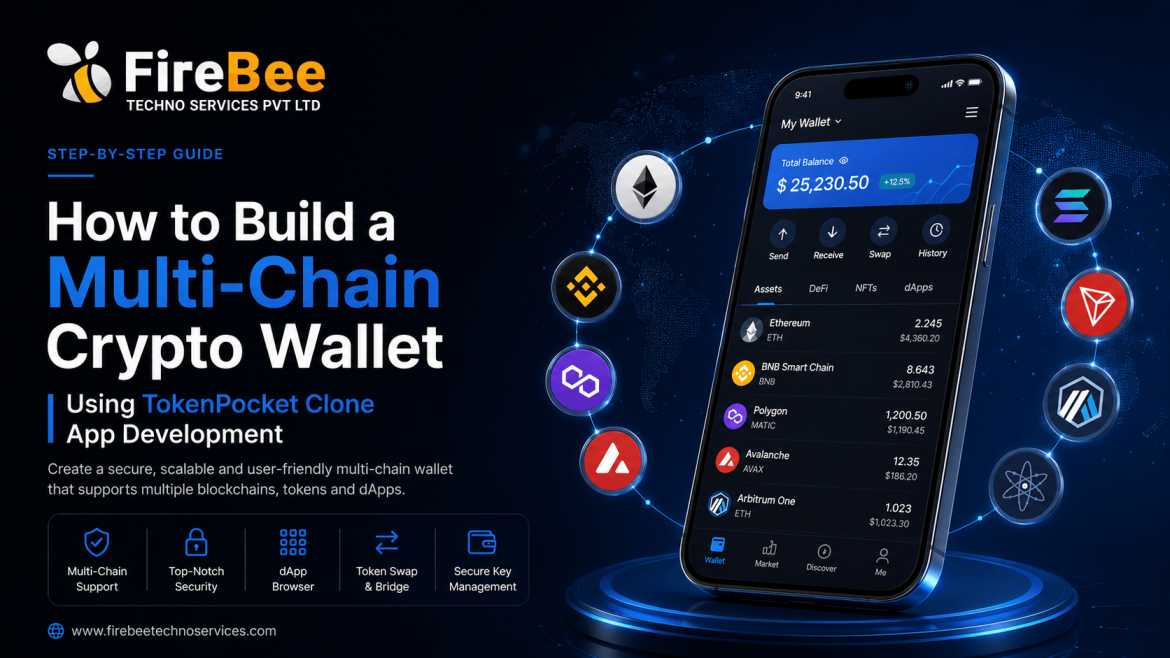
The growing adoption of decentralized finance and self custody is creating strong demand for wallets that support multiple networks, assets and Web3 applications. Tokenpocket clone app development enables businesses to build a branded wallet with similar functionality while customizing the experience to their target users.
As users move between different blockchain ecosystems, wallet platforms are evolving beyond basic storage and transfers. A well planned tokenpocket clone app can combine asset management, DeFi access, dApp connectivity and network flexibility in one secure environment.
What Is a TokenPocket Clone App?
A Tokenpocket clone app development project creates a customizable crypto wallet inspired by the core functionality of TokenPocket. It can support multiple blockchain networks, token management, swaps, staking, dApp access and other Web3 features
Businesses can use a tokenpocket clone script as a foundation and modify its interface, supported networks, security layers and monetization features. This approach can reduce development complexity while allowing the wallet to be positioned as an independent product.
Why Businesses Invest in TokenPocket Clone App Development
Tokenpocket Wallet App Development gives businesses an opportunity to enter the expanding self custody wallet market with a ready to customize foundation. The product can be adapted around specific audiences, blockchain ecosystems and regional requirements.
A tokenpocket clone software solution can support several revenue models, including swap fees, premium services, staking related offerings and partner integrations. Businesses can gradually introduce additional services as their user base grows
With Tokenpocket clone script development, companies can focus more on branding, user acquisition, partnerships and ecosystem expansion instead of building every wallet function from the ground up.
How Does a TokenPocket Clone Script Work?
Multi Chain Connectivity
The wallet connects with supported blockchain networks through RPC endpoints and blockchain APIs. Users can switch between networks and manage assets without maintaining separate wallet applications.
Wallet Creation and Management
Users can create or import wallets while retaining control of their private keys. A non-custodial architecture keeps transaction authorization with the wallet owner, rather than a centralized operator.
Transaction Processing
When a user initiates a transaction, the wallet prepares the required blockchain data and requests authorization. After signing, the transaction is broadcast to the appropriate network for confirmation.
dApp and DeFi Interaction
The application can connect users with decentralized applications through wallet connectivity protocols. This enables activities such as token swaps, liquidity participation, staking and other Web3 interactions.
Real Time Blockchain Updates
Blockchain nodes and indexing services provide transaction and balance information to the application. This keeps wallet activity, token balances and transaction statuses updated across supported networks.
Key Components of a TokenPocket Clone Wallet
Multi Chain Asset Management
A Tokenpocket Wallet Clone Script can provide a unified dashboard for viewing coins and tokens across different networks. This creates a convenient experience for users managing diversified digital assets.
Secure Key Management
Private keys and recovery phrases require strong protection throughout the wallet lifecycle. Encryption, safe storage practices, biometric authentication and transaction verification can improve account security
Token Swap Module
An integrated swap module allows users to exchange supported assets without leaving the wallet interface. Liquidity provider and decentralized exchange integrations can help deliver competitive swap execution.
dApp Browser
A built in dApp browser allows users to access decentralized applications, directly from their wallet. Wallet connection and transaction signing can happen without repeatedly exporting sensitive credentials.
Staking Support
Staking functionality can let users participate in supported blockchain networks and manage eligible assets from one interface. Reward tracking and transaction history can further improve transparency.
Cross Chain Support
A Cross chain bridge wallet development can connect supported ecosystems and simplify asset movement between networks. Bridge integrations should include transaction verification and clear fee information before confirmation.
DeFi Integration
A wallet can provide access to decentralized financial services through carefully integrated protocols. Multi chain crypto wallet development makes it possible to bring assets and DeFi functions from several ecosystems into a single application.
What to Evaluate in TokenPocket Clone Software for Your Business
Customization Capabilities
Choose software that allows changes to the interface, branding, supported networks and business logic. Flexible architecture makes future upgrades easier.
Security Architecture
Review encryption, key management, authentication, transaction protection and audit readiness before selecting a solution. Security should remain central throughout the product lifecycle.
Blockchain Compatibility
Check whether the platform supports the networks and token standards relevant to your audience. Future blockchain integration should also be possible without major architectural changes.
Scalability
The solution should handle increasing wallets, transactions, tokens and dApp connections without affecting performance. Cloud ready architecture can support gradual expansion.
API and Third Party Integrations
Reliable APIs simplify connections with exchanges, blockchain nodes, analytics providers and DeFi protocols. Strong integration capabilities can expand wallet functionality over time.
Step by Step Guide to TokenPocket Wallet App Development
Business and Market Analysis
The process begins by defining the target audience, supported ecosystems, business model and core wallet functions. These decisions establish a practical product roadmap.
Design
Designers create intuitive wallet flows for onboarding, asset management, transactions, swaps and Web3 interactions. The interface should make complex blockchain operations easy to understand.
Backend Development
The backend manages APIs, blockchain connectivity, transaction data, notifications and supporting services. Modular architecture allows additional networks and functions to be integrated later.
Blockchain Integration
Developers connect the wallet with selected blockchain networks, token standards, nodes and DeFi protocols. Each integration is tested for transaction accuracy and compatibility.
Security and Testing
A non-custodial wallet development approach requires rigorous testing around private key handling and transaction authorization. Functional, performance, security and integration testing help identify weaknesses before launch
Deployment and Maintenance
After final testing, the application is deployed across the required platforms and infrastructure. Continuous monitoring, security updates, network upgrades and feature improvements keep the wallet reliable.
How to Choose the Right TokenPocket Clone Development Company
Blockchain Expertise
Look for a team with practical experience across multiple blockchain ecosystems. Its technical knowledge should extend beyond basic wallet interfaces.
Proven Development Experience
Review previous wallet and Web3 projects to understand the team’s implementation capabilities. Case studies can reveal how effectively it handles complex integrations.
Security Focused Approach
The development partner should follow strong security practices throughout design, development, testing and deployment. Ask about audits, code review and vulnerability testing.
Custom Development Support
A reliable provider should allow the product to be customized rather than delivering an inflexible package. This includes branding, features, integrations and business specific workflows.
Post Launch Assistance
Wallet software requires regular updates as blockchain networks and protocols develop. Choose a partner that provides maintenance, upgrades, technical tracking and continued development support.
Conclusion
Tokenpocket clone app development provides businesses with a practical path to launching a feature rich multi chain wallet for the growing Web3 economy. With secure architecture, flexible integrations, DeFi access and a user friendly interface, the platform can be shaped around specific market opportunities.
At Firebee, our Crypto wallet development approach focuses on building scalable and customizable wallet solutions aligned with business goals. We build scalable wallet architectures with multi chain APIs, secure key management, smart contract integrations and real time blockchain connectivity. Our technical approach supports EVM and non EVM networks, dApp integrations, token swaps, staking and DeFi functionality.
We implement modular backend architecture, encrypted data handling, secure transaction signing and performance focused infrastructure for reliable wallet operations. We combine blockchain expertise, secure development practices and ongoing technical support to help businesses launch and grow their own Web3 wallet ecosystem.


