





EV Charging Platform Development: A Complete Guide to Building Smart EV Charging Solutions
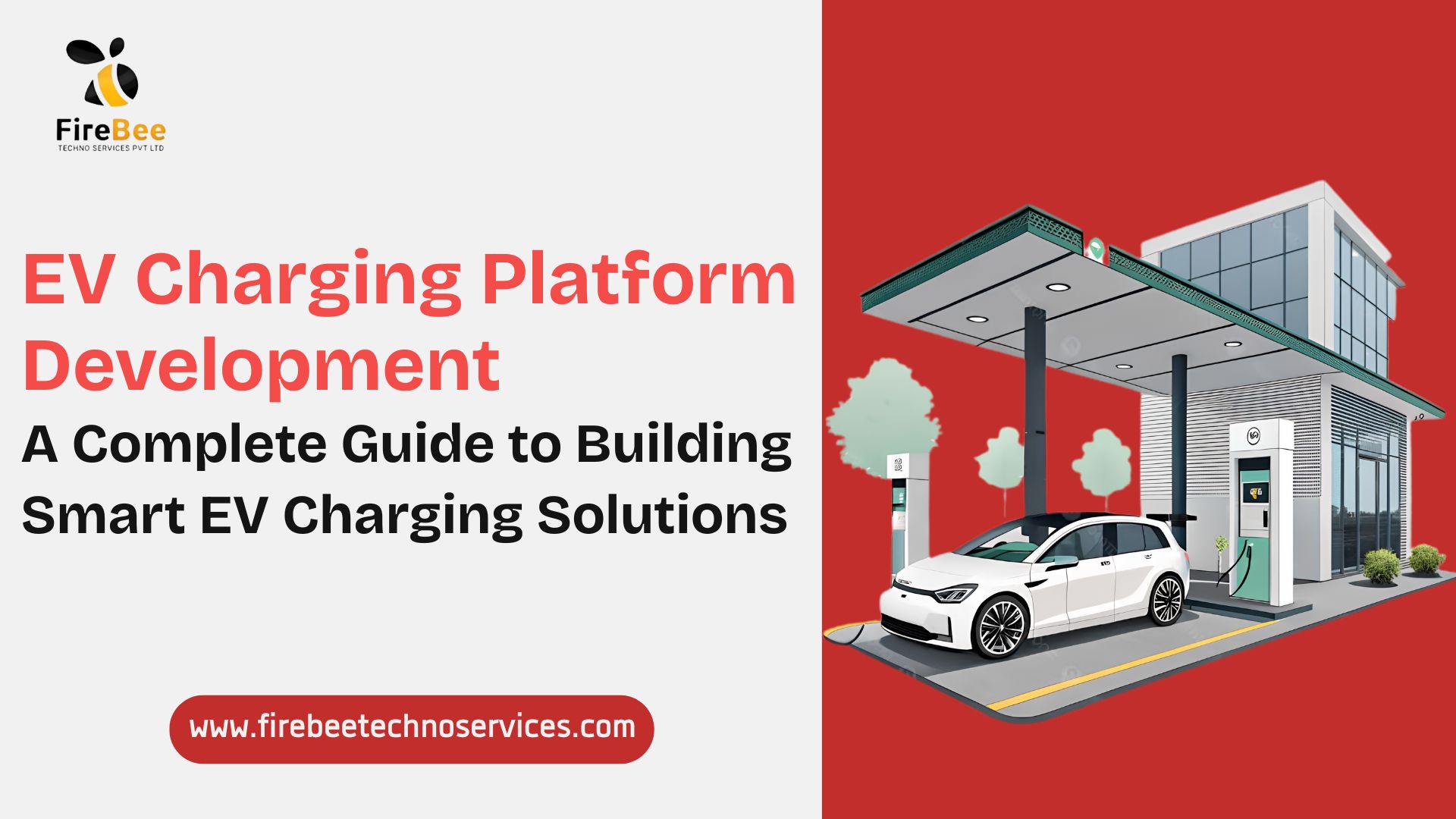
The EV Charging Platform Development is an essential element in the rapidly growing and evolving EV market. A well designed EV Charging Platform can assist in handling charging stations, tracking their operation, facilitating electronic payments and improving convenience for users by offering centralized control.
The guide explores the EV charging platform, some popular business models, necessary features, benefits, revenue opportunities, development steps, technology stack, industry applications and the future trends that will impact the EV charging platform
What is an EV Charging Platform?
An EV Charging Platform is a software system. It allows businesses to handle, track and optimize EV charging infrastructure. It offers a smooth dashboard between charging stations, EV users, operators, payment systems and backend systems. It facilitates an efficient communication and charging process.
A modern platform offers full transparency of the charging process, the health of charging stations, their management, billing and analytics, unlike standalone charging stations. It can manage various charging points and provides operators with a single dashboard for remote control and management of their infrastructure.
How Does an EV Charging Management Platform Work?
EV Charging Management Platform is the control system that facilitates communication between charging stations, users, operators and payment processors.
User Registration and Authentication
Users create an account and securely log in to access charging services, manage profiles and track charging history.
Charger Discovery and Reservation
The system allows users to locate nearby chargers, check real time supply and book charging slots in advance.
Charging Session Management
EV users handle their sessions by starting, monitoring, and stopping charges at stations you remotely control. Energy managers see energy usage and costs at each location and by individual charge session.
Payment Processing and Billing
Secure payment gateways are smoothly integrated for easy charging by end users, automated billing, and clear, digital invoices for each charge session.
Remote Monitoring and Analytics
Operators use the EV Charging Management Platform to track charger health, analyze performance and produce reports for better operational efficiency.
Selecting the right business model is one of the most important decisions in EV Charging Platform Development.
Charge Point Operator
A Charge Point Operator owns, installs and handles charging stations while generating revenue from charging sessions. This model focuses on infrastructure management, maintenance, pricing strategies and charger availability.
E-Mobility Service Provider
An eMSP offers charging services but does not always own the charging stations. Instead, it connects users with a number of charging networks with a single app to make it easier for them to access and pay for charging across providers.
Fleet Charging Solutions
To ensure the availability of commercial EV, logistics and corporate fleets, fleet operators need a dedicated charging infrastructure. This framework will focus on central fleet management, planned charging and efficiency of energy use.
Subscription-Based Charging
For the consumer, the subscription models offer either monthly or annual packages, which offer access to discounted charging rates, premium service, or unlimited charging sessions.
White Label EV Charging Platform
A white label EV Charging Platform allows companies to launch branded charging services with no development of software. The interface, features, payment methods and branding can be tailored to meet the needs of the company.
Core Features of EV Charging Software
Designers can utilize the latest innovations in EV charging software and platform development to add advanced functionalities that boost efficiency, scalability and overall performance for businesses.
-
Real-Time Charger Availability
Updated charging station availability data allow drivers to easily find available charging stations and wait times reduce during parking. Real-time updates also enhance customer satisfaction and usage of chargers.
-
OCPP Protocol Support
The Open Charge Point Protocol ensures smooth communication between charging stations and the central management system. OCPP compatibility enables businesses to handle chargers from various brands through a single platform.
-
Smart Charging and Smart Scheduling
Smart charging enables users to schedule a charging time according to their desired time or electricity prices. This will help to optimize energy usage and minimize operating costs.
-
Secure Payment Integration
A secure payment solution allows for a variety of payment methods, such as credit cards, digital wallet payment, QR code payment, subscriptions and prepaid accounts. Secure payment processing enables easy and safe transactions.
-
Fleet Management
Fleet drivers are able to control all vehicle functions and the vehicle charge schedules from anywhere using the dashboard, which enhances fleet efficiency and reduces any vehicle downtime.
-
Mobile Application Integration
The Mobile App Development enables the users to find the local charging stations, reserve a charger, start charging, pay and view charging history through their mobiles.
-
Remote monitoring and diagnosis
Remote monitoring of the health of the chargers, fault detection, maintenance alerts and solving faults before the user are all possible. The use of remote diagnostics helps in reducing maintenance cost and improving charger uptime.
-
Analytics and Reporting
Detailed dashboards offer top-level information regarding charging sessions, revenue, energy consumption, customer behavior and station performance. These reports inform business decisions, based on data and continuous service improvement.
Benefits of EV Charging Software & Platform Development
Investing in EV Charging Software & Platform Development offers significant advantages for businesses looking to build reliable and scalable charging infrastructure.
High Operational Efficiency
Automation reduces manual tasks such as billing, charger monitoring, maintenance scheduling and customer management. Businesses can efficiently oversee multiple charging locations, through a centralized dashboard.
Enhanced Customer Experience
Convenient and user-friendly charging experience for EV Drivers with discovery, reservations, secure payments and real time charging information and Payment Gateway Integration.
Scalable Infrastructure
With the charging demand growing, companies can easily expand the charging network without the need to rebuild the whole platform. A scalable architecture allows for easy addition of more stations and users and integration with other systems with limited disruption.
Secure Transactions
Utilize top security standards to safeguard your personal, payment and charging session data. Our charging platform uses safe encoding and authentication and adheres to all relevant standards and best practices.
Increased Revenue Opportunities
A well developed EV Charging Solution accommodates various revenue stream models, such as usage fees, subscriptions, add-on features and fleet management partnerships to enhance long-term profit and efficiency.
Step by Step Guide to EV Charging Platform Development
Development of an effective EV charging platform requires proper planning, the correct tech stack and a complete grasp of the business goals.
-
Step 1: Establish Business Requirements
First, you must decide on the target audience, business aims, size of your charging network, business model as well as platform functionalities. A precise plan helps make the development procedure smoother.
-
Step 2: Identify the Right Business Model
Select a model that corresponds with your objectives. Whether it is a charge point operator, eMSP, fleet charging solution, subscription service or white label platform.
-
Step 3: Design the Platform Architecture
Businesses define a scalable cloud architecture that supports remote access, real time monitoring and future expansion. Utilizing best practices from Enterprise Software Development ensures the platform remains secure, flexible and easy to maintain.
-
Step 4: Develop Core Features
Build essential functionalities such as charger discovery, user authentication, charging session management, payment processing, analytics and administrative controls. During this stage, EV Charging Software and Platform Development focuses on creating a reliable and user friendly experience.
-
Step 5: Integrate OCPP, APIs and Payment Gateways
Implement OCPP protocols for charger communication, payment gateways for secure transactions, map services for charger discovery and notification systems for user engagement.
-
Step 6: Test and Optimize the Platform
Testing to identify potential bugs, assess security, performance, ease of use and compatibility issues. Resolve the bugs discovered before product release for a better user experience.
-
Step 7: Set Up and Manage the Platform
Launch the platform in the production setting, and constantly track the performance. Regular updates, feature improvements, safety patches and technical support ensure long term success and business growth.
Revenue Opportunities with an EV Charging Management Platform
An advanced EV Charging Management Platform creates many income sources other than typical charging fees.
Charging Session Fees
The most frequently used revenue model is based on the amount of electricity used, charging time or a fixed fee for a charging session.
Membership and Subscription Plans
Subscription fees offer discounted charging rates or priority access to customers, or premium services for customers if they wish to pay a higher subscription fee.
Fleet Charging Contracts
Businesses can partner with logistics companies, taxi operators, corporate fleets and public transportation providers to deliver charging services through long term agreements.
White Label Licensing
Companies can distribute their charging platform to other businesses under a white label model, enabling partners to launch branded charging solutions.
Advertising and Promotional Services
Digital displays within charging stations and mobile applications can produce extra income through targeted ads, brand partnerships and promotional campaigns.
Why Choose Fire Bee for EV Charging Platform Development?
Our Fire Bee experts offer innovative On-demand App development solutions to meet the requirements of businesses, charge point vendors and mobility service providers. We blend technology know-how to develop robust feature rich solutions. It allows simplifying charging business operations, improving customer experiences and helping businesses grow and excel in the long run.
From strategy and design to EV Charging Software and Platform Development, API integrations, testing, deployment and post launch maintenance, we provide end to end development services under one roof. With a strong focus on performance, security, OCPP compliance and future ready architecture, Fire Bee helps businesses launch reliable EV charging platforms that are built to scale with the growing electric mobility market.


